Materials & Making
Inside the Silk Travel Pillow: Shell, Fill, and Portability
A travel pillow is a small negotiation between softness and support, bulk and usefulness. Its comfort depends not simply on its shape, but on the quiet arrangement of layers inside: the fabric against the face, the casing around the filling, and the filling itself.
Published November 21, 2026
There is a particular intimacy to the travel pillow. It accompanies its owner through places where almost nothing else is familiar: the dry air of an airplane cabin, the uncertain upholstery of a train, the too-bright room of a hotel. It must be soft enough to invite sleep and composed enough not to become an awkward parcel once sleep has failed to arrive. Its dimensions are modest; its obligations are not.
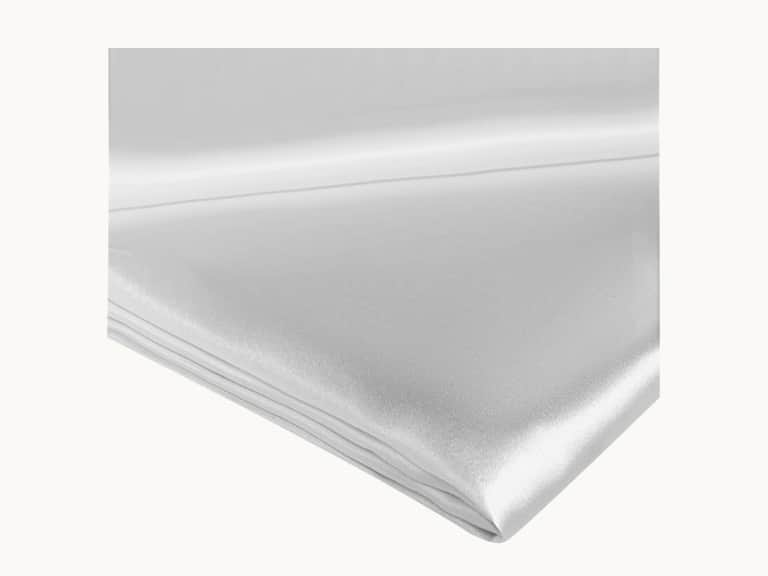
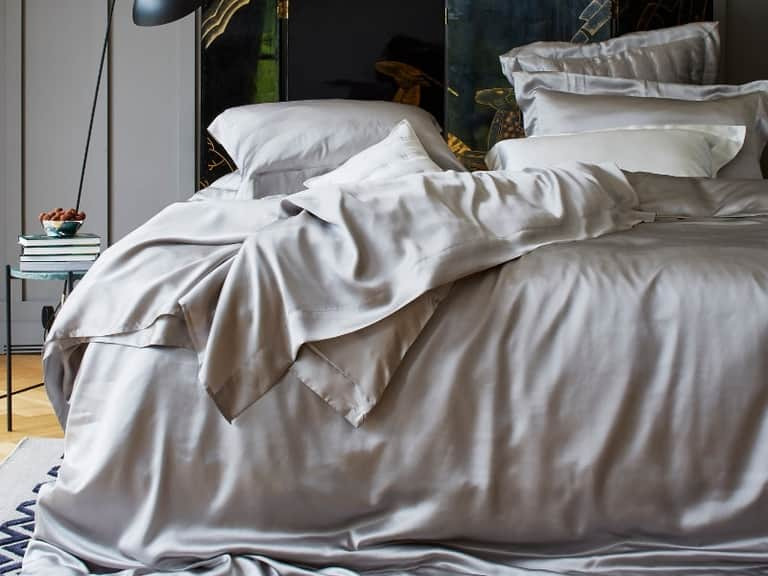
Silk travel pillows make a distinctive promise at the point of contact. A mulberry silk shell feels smooth against the cheek, with a fluid, cool hand that differs from the fleecier or more utilitarian fabrics common in portable cushions. But a pillow’s surface is only its opening sentence. Beneath it, the inner casing and filling determine whether the pillow has a little give, a dependable loft, or the tendency to flatten into a pleasant-looking but unhelpful fold.
To understand a silk travel pillow, then, is to look past the sheen. Its construction is a small system: outer shell, inner casing, filling, seams and closures, each contributing something to comfort, care, and portability. A compact pillow that works well does not eliminate the compromises of travel. It makes them more manageable.
The first layer: what the shell does
The shell is the part of the pillow most immediately experienced. It touches skin, hair, and sometimes the collar of a coat when the pillow is carried rather than used. In silk travel pillows, the outer fabric may be made from mulberry silk, a category of cultivated silk associated with the domesticated silkworm and a relatively even, fine filament. The fabric’s smoothness is not merely a visual effect. It changes how the pillow feels as a person shifts position, turns toward a window, or tries to settle into a seat that was not designed for sleeping.
Silk is often described as breathable and temperature-regulating. Those phrases can make the fabric sound almost mechanical, as if it were adjusting a thermostat. In practice, comfort depends on the whole environment: cabin temperature, clothing, body heat, ventilation, and how long the pillow remains in contact with the skin. A silk surface may feel cool and smooth, but it does not guarantee a particular sleeping temperature. It is one element in a larger experience, not a substitute for a blanket, a good seat, or a fortunate neighbor.
Its low-friction surface is another reason silk appears in bedding and travel accessories. Compared with rougher textiles, it can allow the face or hair to move across it with less drag. That is a tactile property, not a medical promise. A silk cover does not treat skin conditions or prevent every crease or tangle; individual results depend on many factors, including skin, hair, sleep position, and the length of use. Still, the difference in surface feel can be immediately apparent, which matters when a pillow is pressed against the face for hours.
Mulberry silk also carries a familiar association with refinement. On a travel pillow, that association is asked to do practical work. The shell must endure handling, compression in a bag, and repeated contact with the face while remaining comfortable. A lovely fabric that is difficult to maintain may prove less useful on the road than a less delicate one. The right question is therefore not simply whether the silk feels luxurious, but whether the fabric and its care requirements suit the way the pillow will actually travel.
Under the surface: inner casing and filling
Between a silk shell and a pillow’s filling there may be an inner casing: a separate layer that contains the stuffing, helps hold the pillow’s shape, and keeps the fill from shifting directly against the outer cover. In some designs, that casing is cotton sateen. The choice makes sense as a matter of construction. A casing needs to contain the filling and withstand pressure; the shell can be selected for its surface feel, while the inner fabric serves a quieter structural role.
Some silk travel pillow designs combine a cotton sateen inner casing with a fill that includes silk and polyester. One example of this arrangement uses a filling described as silk wrapped around a polyester core. In such a construction, the materials are not interchangeable labels. Silk contributes to the character of the filling, while polyester can help supply resilience and shape retention. The exact feel depends on the proportions, arrangement, density, and stitching, so a material list alone cannot tell the entire story.
Fill determines the pillow’s loft: how high it rises under the head, and how much it yields under pressure. A pillow that is too firm may push the head into an awkward angle; one that is too soft may compress until it offers little support. Travel adds another demand. The pillow may be squeezed between belongings, tucked beneath an arm, or pressed against a seat. A filling that returns to its shape after compression is useful, but no fill should be assumed to recover perfectly without care or time.
The words “silk filling” can also conceal important differences. A pillow may be filled wholly with silk, may combine silk with a synthetic fiber, or may use silk as a wrapping around a more resilient core. Those are distinct constructions, and they may behave differently. A reader comparing silk travel pillows should look for a clear description of the filling rather than relying on a broad claim about silk alone. If a listing does not explain the composition, it is reasonable to ask what the fill contains and whether it is intended to be removed, aired, or cleaned in a particular way.
Support, meanwhile, is partly a question of purpose. A small travel pillow may cushion the neck, support the head against a seat, or simply provide a familiar soft surface. A compact rectangular or shaped pillow will not necessarily perform the same role as a contoured neck pillow. Before comparing fibers, decide where the pillow is expected to go: behind the neck, between the shoulder and a wall, on a lap, or in a hotel bed. A construction that feels delightful in one position may be inadequate in another.
Portability is more than size
A pillow can be small and still be inconvenient. Portability is the sum of its dimensions, weight, shape, ability to compress, cover design, and the way it fits into a traveler’s habits. A compact pillow that has to be carried loose may be less convenient than a slightly larger one with a secure closure or a dedicated place in a bag. Conversely, a bulky cushion with impressive loft may occupy precisely the space reserved for a book, a sweater, or the small collection of objects one insists on bringing through an airport.
Silk’s lightness can help make a travel accessory feel less cumbersome, but the filling and construction count as much as the shell. A pillow with a dense core may weigh more than its delicate exterior suggests. A cover that can be removed may make refreshing the surface easier, although it introduces an additional component to keep track of. Buttons, clips, or other fastenings can help hold a pillow in place or attach it to luggage, but they should be assessed for comfort and durability as well as convenience.
Shape matters, too. The familiar U-shaped travel pillow is built to sit around the neck, though its usefulness varies with a person’s proportions, seat, and preferred sleeping position. A smaller cushion can be more adaptable, but may require the traveler to position it repeatedly. Neither form is universally superior. A useful travel pillow is one that supports the way its owner tends to rest, not one that wins an abstract contest in compactness.
Compression is worth considering before packing. Some pillows can be squeezed down for storage; others are intended to retain their loft and should not be kept tightly compressed for long periods. If a pillow’s instructions do not address compression, avoid assuming that it can be folded or packed under heavy luggage indefinitely. The most portable object is not necessarily the one that can be crushed smallest. It is the one that survives the trip in a condition that still makes it pleasant to use.
Even the journey’s length changes the calculation. For a short train ride, a slim pillow may offer enough cushioning without taking over a tote. For an overnight flight, support and fill recovery may matter more than saving every inch of bag space. A traveler who moves frequently between taxis, platforms, and terminals may prefer a pillow that can be secured to luggage. Someone heading directly to a car may have room for a more substantial cushion. Portability is not a fixed measurement; it is a relationship between an object and the itinerary it must accompany.
Removable covers and the question of care
A removable cover can be one of the most practical features of a silk travel pillow. The shell has direct contact with skin and hair, and travel exposes it to hands, seats, luggage, and the general atmosphere of transit. Being able to remove the cover makes it easier to clean the surface without washing the entire pillow. It can also make the pillow simpler to refresh between journeys, provided the care instructions permit the chosen method.
But “removable” should not be confused with “machine washable.” Silk is a delicate fiber, and care varies by fabric, finish, dye, construction, and manufacturer. Some silk covers may be washed on a gentle or delicate cycle with a suitable mild detergent; others may require hand washing or specialist care. High heat, harsh detergents, bleach, vigorous agitation, and tumble drying can damage delicate fabric. The correct procedure is the one specified for that particular item, not a general rule inferred from another silk product.
The fill deserves its own care instructions. A cover that can be laundered does not mean the inner pillow can be washed in the same way. Silk fibers, polyester components, and stitched casings may respond differently to moisture and heat. If the filling cannot be washed, airing it may be appropriate; if a stain occurs, spot cleaning could be recommended. Check the manufacturer’s guidance before treating the whole pillow as if it were simply a pillowcase.
There is a practical ritual in keeping a small textile object ready for travel. After a trip, the pillow can be allowed to air out, the cover checked for marks, and the closure examined before it returns to a cupboard or bag. A dry, well-ventilated storage place is preferable to a damp or tightly packed one. These small habits are not elaborate maintenance. They are a way of keeping the pillow from becoming one more forgotten object at the bottom of a suitcase.
How to compare silk travel pillows
Product descriptions often foreground the phrase “mulberry silk,” then move quickly to color, trim, or an impression of luxury. Those details can be useful, but an informed comparison asks for more. The shell material should be identified clearly. The filling should be described with enough precision to distinguish silk-only fill from a blend or a silk-wrapped core. If there is an inner casing, its material and role should be stated. Construction details help turn a soft promise into a more concrete picture of what is being purchased.
- Shell: Is it specified as 100% mulberry silk, a silk blend, or another fabric? Is the cover removable?
- Fill: Is the pillow filled with silk, polyester, memory foam, a blend, or a layered combination? Are proportions provided?
- Inner casing: What fabric contains the fill, and does the description explain how the pillow is assembled?
- Shape and size: Does the pillow suit the intended use, whether neck support, head cushioning, or general travel comfort?
- Closure and attachment: Is there a zipper, button, clip, or other fastening, and will it remain comfortable in use?
- Care: Are the instructions clear for both the cover and the pillow itself?
- Portability: Can the pillow be packed or attached conveniently, and does the product information give useful dimensions?
These questions are deliberately ordinary. They do not ask the buyer to become a textile engineer. They ask the product description to disclose what its materials are doing. A detail such as a cotton sateen casing, for instance, provides a more useful account of construction than a vague assurance of softness. The same is true of a stated fill blend or a clear note that the cover is removable and washable according to specific instructions.
It is also wise to distinguish a tested feature from a broad claim. “Breathable,” “hypoallergenic,” and “temperature-regulating” appear frequently in bedding language, but the practical meaning can vary. Such phrases do not establish that a pillow will prevent allergies, solve discomfort, or work equally well for every sleeper. A careful reader can appreciate the properties of silk while remaining attentive to the limits of what fabric alone can promise.
Silk, synthetic fill, and compromise
In conversations about natural and synthetic fibers, the comparison can become more moral than material. Silk may be valued for its smoothness and relationship to a long textile tradition; polyester may be selected because it contributes resilience, shape, or affordability. A travel pillow that combines them is not necessarily a lesser version of a wholly silk object. It is a design making a particular compromise, and the relevant question is whether that compromise serves the traveler.
A mixed fill can balance a softer outer layer with a more resilient core. That arrangement may help the pillow keep its form, though performance depends on the materials and construction rather than the name of a fiber alone. A pillow filled entirely with silk may feel different from one that uses silk around a polyester center. Neither label tells us exactly how a pillow will behave after a long journey, but each helps identify the questions to ask.
Nor is “natural” synonymous with effortless care. Silk requires attention, and a travel accessory may encounter more rough treatment than bedding kept at home. A durable design can still be delicate in the wrong conditions; an easy-care component can still need particular handling. Consider the places the pillow will go, the frequency of use, and the amount of care its owner is willing to give it. The finest material is not always the best choice if its maintenance turns every trip into a small laundry problem.
A small object, considered closely
The appeal of a silk travel pillow lies partly in its scale. It is a modest intervention in a setting defined by inconvenience: a soft surface brought into a public space, a little familiar comfort carried through an unfamiliar schedule. But the object earns its place in a bag through construction, not reputation. The silk shell sets the feel against the skin; the inner casing contains and supports; the filling gives the pillow its loft and character; the closure and dimensions determine how easily it travels.
When those layers are described clearly, a reader can judge what the pillow is likely to offer—and what it is not. A mulberry silk exterior may provide a smooth, breathable contact surface. A cotton sateen inner casing may contain a blended filling. A removable cover may simplify care, while leaving the inner pillow subject to separate instructions. Each feature has a role, and none should be asked to promise the whole of travel comfort on its own.
The best travel pillow is not necessarily the softest, the most ornate, or the smallest. It is the one whose size suits the journey, whose fill gives the needed support, whose cover feels pleasant against the face, and whose maintenance seems realistic once the trip is over. In the narrow space between a seat and a window, those details stop being specifications and become experience: the pillow held in place, the cheek against silk, the long wait made a little less like waiting.